

Key Takeaways
- Neighborhood characteristics directly affect the effectiveness and appropriateness of smart home technologies.
- Community norms and local regulations can influence the adoption and implementation of certain smart devices.
- Understanding local infrastructure is essential for optimal smart home integration.
Understanding the nuances of a neighborhood can significantly shape the choices homeowners make when investing in smart home technology. Beyond the devices themselves, factors such as local safety, traffic patterns, community amenities, and environmental conditions often influence decisions on security systems, energy management, and connectivity solutions. Homebuyers and residents alike benefit from having a clear understanding of the neighborhood’s characteristics, allowing them to tailor technology that enhances convenience, safety, and overall quality of life.
Professionals familiar with the local real estate landscape, like Orange Beach AL real estate agent Matthew Welch, often emphasize the importance of integrating neighborhood insights into home planning. Knowing the area’s unique traits can guide decisions on features such as surveillance coverage, automated lighting for energy efficiency, or smart climate controls adapted to the local weather. By aligning technology choices with community dynamics, homeowners can ensure their smart home systems are both practical and responsive to their surroundings.
Infrastructure and Connectivity
The speed and reliability of your neighborhood’s internet service can make or break your smart home system. Fast, stable broadband allows for the smooth operation of devices such as voice assistants, smart thermostats, and connected security cameras. Neighborhoods with outdated or limited connectivity often experience frustration due to lagging device response or dropped connections, which undermines the primary benefit of automation. Having a reliable home internet setup with quality routers and proper placement is crucial as the first step in any technology upgrade.
Community Norms and Privacy
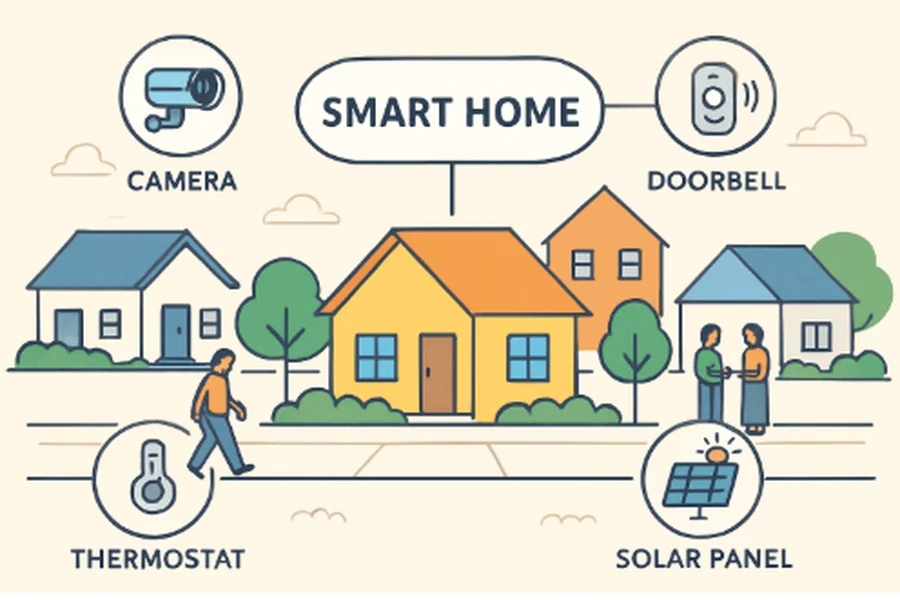
Every neighborhood has a distinct approach to privacy and the adoption of technology. If you live in an area where residents are receptive to innovation, installing visible devices like smart doorbells and outdoor cameras may be easier. On the other hand, communities focused on privacy might view overt security systems with suspicion. Research into “interdependent privacy” in smart homes, published on arxiv.org, demonstrates the ripple effect that one neighbor’s devices can have on others, underscoring the need to gauge neighborhood sentiment before installing devices that collect visual or audio data.
Local Regulations and Compliance
Municipal codes and HOA guidelines may require prior approval for certain smart tech installations, especially those that alter a home’s exterior appearance, such as security cameras or video doorbells. Familiarizing yourself with these rules ensures compliance, avoids unnecessary disputes, and fosters a cooperative relationship with neighbors and local authorities. Not only do these steps protect your investment, but they also help maintain the community’s character and standards.
Property Values and Market Trends
Smart home features are increasingly influencing property values, but their impact varies significantly by neighborhood. In tech-friendly suburbs or upscale communities, homebuyers may be willing to pay a premium for properties equipped with automation and energy-efficient upgrades. An in-depth analysis reveals how specific markets have leveraged smart add-ons as strong selling points, particularly when combined with professional installation and integration. Monitoring local real estate statistics can help you match your investments to market demand and maximize returns when it’s time to sell.
Security Considerations
Regional crime statistics and neighborhood security profiles play a vital role in determining what level of protection your smart home system should provide. In high-crime areas, comprehensive solutions such as linked alarms, motion sensors, and real-time camera monitoring systems may be necessary to achieve genuine peace of mind. Conversely, in communities with low crime rates, homeowners often prioritize ease of use or simple deterrents over extensive coverage. Understanding the specific risks in your neighborhood will help you tailor your investments to strike a balance between safety and practicality.
Energy Efficiency and Sustainability
The local climate and energy ecosystem also shape smart home priorities. Households in regions with volatile weather or high utility costs often find a quick return on investment from smart thermostats and energy monitoring systems, which help regulate consumption and reduce bills. Increasingly, neighborhoods with a green ethos are coming together to adopt solar panels, battery storage, and shared electric vehicle charging solutions.
Neighbor Recommendations
Direct feedback from neighbors is a powerful tool for discovering the most reliable and effective smart tech options. Social networks report that the majority of community members have acted on their neighbors’ recommendations when selecting service providers or new gadgets. Engaging in these discussions in person, through forums, or virtually can save you from costly mistakes and introduce you to trustworthy installers or the latest technology deals.
Conclusion
There’s no one-size-fits-all approach to building a smart home. Each neighborhood has unique infrastructure, preferences, and regulations that impact what solutions work best. By tapping into local knowledge, seeking compliance, and tuning your investments to community trends, you can create a home that’s smarter, more comfortable, and aligned with both your values and those of your neighborhood.
