


Finding the right charger for your smartphone can be surprisingly confusing. Many people assume that higher wattage automatically means faster or better charging, but that’s not always true. With so many numbers and terms printed on packaging, it’s easy to buy the wrong charger and end up with either slow performance or unnecessary expense. Understanding wattage, voltage, and how your phone actually manages power is the key to charging efficiently and safely. In this article, we’ll explain how charger wattage works, how to find the right match for your phone, and what factors matter most when making a smart purchase.
Demystifying Wattage: It’s About Speed, Not Just Power
How Watts, Volts, and Amps Work Together
Wattage is the total amount of power a charger can deliver, and it’s determined by multiplying volts (V) and amps (A). Think of voltage as the water pressure and amperage as the amount of water flowing through a pipe—together, they define how quickly electricity reaches your phone’s battery. Most smartphones use chargers that provide between 5V to 20V, with amperage varying depending on the device. The combination of these two determines wattage, which directly impacts charging speed. A higher wattage allows more power transfer, but only if your phone supports it.
Why Your Phone Controls the Charging Flow
Even though chargers provide power, it’s your phone that ultimately decides how much energy to draw. Modern smartphones are designed with smart charging circuits that regulate voltage and current to protect the battery. This means if you plug a 45W charger into a phone that only supports 18W, it will only take 18W—no more, no less. This built-in control prevents overcharging, overheating, and other safety issues. Understanding this gives users peace of mind, knowing that as long as they use a reliable charger, their device won’t be damaged by “too much power.” Your phone’s intelligent management system ensures the right balance between speed and battery safety.
The Sweet Spot: Matching Wattage to Your Phone
Standard Charging (5W to 18W) for Most Basic Needs
If you use your phone primarily for calls, messaging, and light browsing, a charger between 5W and 18W is sufficient. These chargers provide a steady and gentle power flow, which helps maintain long-term battery health. They are ideal for overnight charging or for users who prefer a slow, consistent charge that doesn’t generate excess heat. For many people, slower charging isn’t a disadvantage—it actually extends the life of the battery by reducing wear on internal components. If you’re not in a rush, a standard wattage charger offers both safety and efficiency.
Fast Charging (25W to 45W) for Modern Mid-Range and Flagship Phones
Most of today’s mid-range and high-end smartphones support fast charging between 25W and 45W. This range provides a good balance between speed and safety, allowing users to charge their phones from nearly empty to over 50% in half an hour. Such wattage is ideal for busy lifestyles—whether you’re commuting, working, or traveling, a quick charge can make a big difference. Fast chargers deliver more current when the battery is low, then gradually taper off as it nears full capacity. This helps prevent overheating while still providing the convenience of rapid power replenishment.
Ultra-Fast Charging (65W and Above) for Power Users
For those who rely heavily on their smartphones—such as gamers, content creators, or professionals constantly on the move—chargers rated at 65W or higher offer impressive performance. These chargers can fill large batteries in less than an hour, ensuring minimal downtime. However, they’re best suited for devices specifically designed to handle such high input. Using a 65W charger on a phone that only supports 25W won’t make it charge faster, as the phone’s internal circuitry will cap the power draw. While ultra-fast charging is convenient, users should also be mindful of heat generation and battery stress from frequent use at such high speeds.
Why a Super-High Wattage Charger Isn’t Always Better
The Role of Heat in Battery Degradation
Heat is one of the biggest enemies of battery longevity. When you charge your phone with a very high-wattage charger, the rapid energy transfer can generate additional heat, especially if the device is being used simultaneously. This heat causes gradual wear on the battery’s internal chemical structure, reducing its capacity over time. That’s why experts often recommend balancing speed with temperature control. Occasional fast charging is perfectly fine, but if you charge multiple times a day or overnight, it’s better to use a moderate wattage charger to minimize heat buildup.
Your Phone’s Built-In Power Limiter
No matter how powerful your charger is, your phone’s charging management system decides how much energy it can safely accept. This safeguard prevents excess current from entering the battery, which could otherwise cause damage or instability. It’s similar to a traffic controller managing cars entering a tunnel—only a safe number are allowed at once. Therefore, buying a charger with an extremely high wattage doesn’t improve performance if your phone can’t take advantage of it.
Key Factors Beyond Wattage for a Smart Purchase
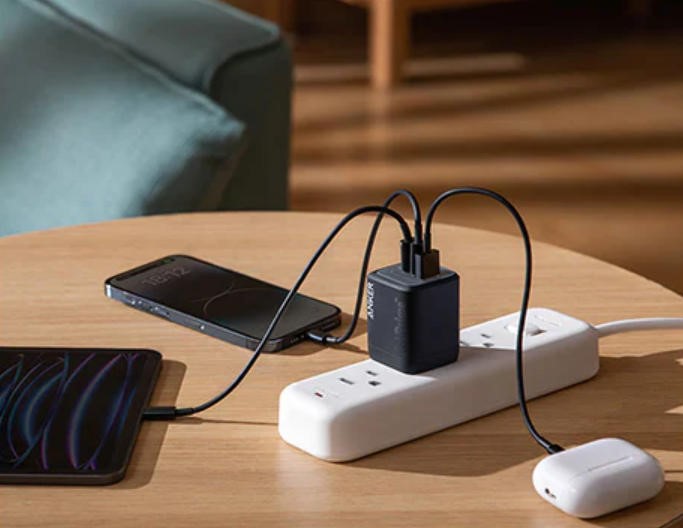
When buying a charger, wattage isn’t the only thing that matters. Safety certifications, build quality, and cable design also play a major role in performance and longevity. Look for chargers that are made with robust materials and feature safeguards against overcurrent, short-circuits, and overheating. Reliable brands like Anker produce chargers known for their durability, consistent performance, and strong safety record. Whether you’re choosing a compact wall adapter or an android quick charger for travel, Anker’s models deliver dependable power that adapts to your device’s needs. Investing in a well-built charger ensures not only faster charging but also better protection for your smartphone’s battery and internal components.
Conclusion
Selecting the right smartphone charger doesn’t have to be complicated once you understand wattage and how it affects charging performance. The best approach is to match your charger’s wattage to your phone’s supported level while considering safety and quality as top priorities. Remember, a higher wattage isn’t automatically better—your phone’s internal system limits how much power it draws. What really matters is choosing a reliable, well-made charger that offers balanced speed and protection. Anker provides a wide variety of charging options, from standard to Android quick charger models, built to handle your everyday needs safely and efficiently. With the right knowledge and tools, you can keep your smartphone powered up smoothly, no matter where life takes you.
