

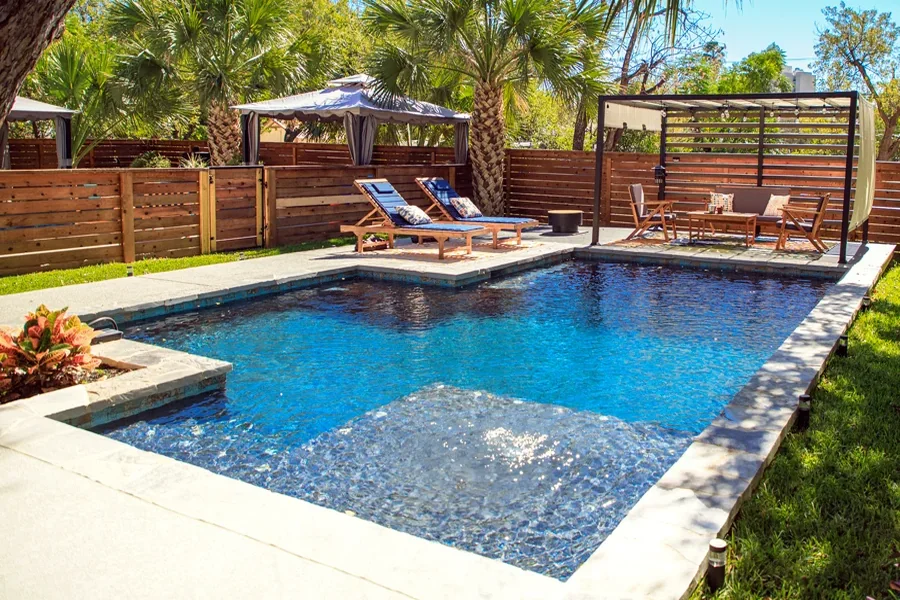
A concrete pool deck can look like a glossy travel-magazine spread—a clean frame of cool gray that makes your water glitter like sapphire. Sadly, that dream often cracks (sometimes literally) when shortcuts sneak into the build.
From rushed prep work to careless curing, simple missteps can leave you with puddles, trip hazards, and a surface that flakes before swimsuit season is over. Save yourself the headache (and the jackhammer rental) by steering clear of the four big mistakes below.
Skimping on Proper Sub-Base Preparation
One of the fastest ways to sabotage a pool deck is treating the soil beneath it like an afterthought. Concrete is only as stable as the base that supports it, yet DIYers often pour over loosely compacted fill or, worse, straight onto native soil that was just excavated for the pool shell. As that fluff-soft ground settles, voids form, slabs sink, and hairline cracks spider outward.
The cure is tedious but non-negotiable: excavate to the recommended depth, add a layer of crushed stone, and compact in thin lifts until a vibrating plate compactor barely leaves a footprint. A properly compacted sub-base creates a uniform load path and keeps your deck from mimicking a roller coaster after the first heavy rain.
Ignoring Drainage and Expansion Joints
Water is relentless—give it a chance to pool, and it will exploit every micro-fracture in your concrete. Builders sometimes forget the deck’s job is to persuade water to move away from both the pool and the house. Sloping the slab at roughly 1/8 inch per foot guides runoff to drains or adjacent landscaping, while wide, clean relief joints let each section expand and contract without grinding against its neighbor. Skip those joints, and you’ll hear sharp “pops” as thermal pressure forces random cracks.
Equally troubling, standing water between the deck and the coping promotes algae growth and stains that no pressure washer can fully erase. Plan your pitch, install drain channels, and saw-cut expansion joints within 24 hours, and your pool deck will shed water like a freshly waxed car hood.
Choosing the Wrong Mix and Finish
Not all concrete is created equal, especially when chlorinated splash-out and ultraviolet radiation are daily guests. Using a standard driveway mix around a pool is like wearing suede shoes to the beach—technically possible, but a poor idea. Opt for a mix with a low water-to-cement ratio and a minimum compressive strength of 4,000 psi, and insist on air entrainment to handle freeze-thaw cycles if your climate demands it.
Finish choices matter, too. Trowel a mirror-smooth surface and you’ll create an Olympic-grade slip-and-slide. Instead, broom-finish the deck perpendicular to traffic lanes or broadcast a light salt finish for subtle texture. These small upgrades cost pennies on the square foot yet spare you bruised hips and emergency resurfacing bills.
Rushing the Curing and Maintenance Steps
Concrete brags about reaching 70 percent of its design strength in a week, but that final 30 percent takes patience. Covering fresh slabs with wet burlap or a curing blanket for at least seven days allows proper hydration and locks in surface hardness. Peel those covers too early, and the top layer dries faster than the core, creating internal tension that shows up later as scaling or spalling. Equally perilous is loading the deck before time.
Wait a full month before rolling in heavy patio furniture or firing up the grill. If settling does appear—especially near the pool’s edge—call a pro who specializes in concrete slab leveling rather than ripping everything out. A quick polyurethane injection can lift panels back to grade, saving thousands and your summer plans.
Conclusion
Installing a concrete pool deck isn’t space science, but it punishes anyone who treats it casually. Solid sub-base compaction, smart drainage design, a pool-appropriate mix and finish, and patient curing form the four-legged stool that supports years of sun-soaked cannonballs.
Skip even one leg and the whole surface wobbles—often irreversibly. Invest a little extra effort, follow best practices, and your deck will stay smooth, safe, and Instagram-worthy long after the novelty of the new pool smell fades.
