

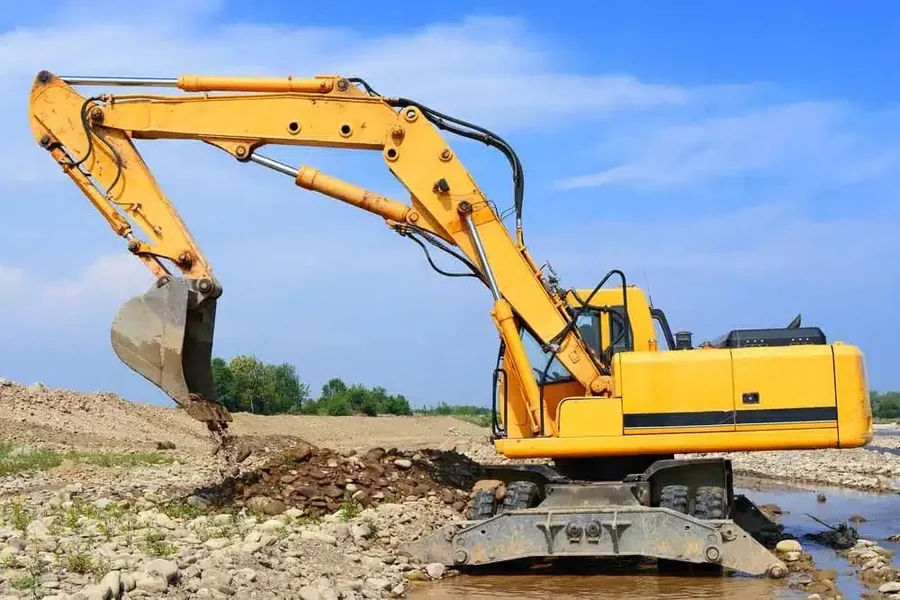
Breaking ground is louder than a ribbon-cutting yet quieter in the headlines. Still, every finished building owes its stability—and its owner’s peace of mind—to the crew who transforms rough earth into a level, load-bearing platform. Think of excavation as the handshake between nature and engineering: it’s where untamed soil meets a plan, and the land says, “All right, I’m ready. Build here.”
Surveying the Unknown
Before a bucket ever bites the ground, surveyors pace the site with lasers and GPS receivers, turning wild acreage into a grid of precise coordinates. Those pinpoints reveal slope angles, hidden sinkholes, buried utilities, and the way rainwater naturally wants to escape. At the same time, geotechnical engineers drill test holes and pull up plugs of earth that tell stories about clay layers, sand seams, and groundwater depth.
Their lab results decide whether the structure will sit on shallow footings or deep piles. A thorough survey feels slow when schedules are tight, but it is cheaper than curing a foundation crack after the walls are painted.
Clearing the Canvas
Once everyone knows what lies beneath, heavy machines roll in to clear trees, brush, and any relics from past uses—a cracked slab here, an old fuel tank there. Operators fell timber with a single swipe of a grapple saw, stack it for mulch or milling, and grind stubborn stumps below grade. Rock breakers shatter boulders that refuse to budge.
The goal is more than tidiness; removing organic matter keeps future slabs from settling unevenly as roots rot. By the end of clearing, survey stakes stand undisturbed, and there’s enough open room for haul trucks to dance without knocking mirrors.
Carving and Compacting the Grade
Now the real sculpting begins. Bulldozers shave down high spots, while scrapers ferry excess soil to dips that need filling. Instead of dumping it all at once, crews build the pad in thin lifts—each about the thickness of a textbook—then roll them with vibrating compactors. That slow “stack and squash” rhythm squeezes air pockets out of the soil, giving it the density and shear strength engineers specified.
Well-compacted fills don’t behave like a loose sandbox; they hold fast under foot traffic, parked cranes, and decades of structural load. When inspectors jab a nuclear density gauge into those layers and nod in approval, everyone sleeps better.
Managing Water Before It Manages You
Earth moves easily when dry, but water can turn a neat trench into a dangerous soup overnight. Smart excavation outfits treat drainage like insurance. They cut shallow swales to steer storm runoff away from open cuts, line temporary ditches with filter fabric, and ring stockpiles with silt fences that keep muddy water from escaping.
If they strike a perched water table or wake up to last night’s downpour filling the footing trench, the crew fires up a dewatering pump to lower the level before concrete crews arrive. By wrestling with water early, contractors avoid costly delays, soggy rework, and the safety hazards of collapsing trench walls.
Conclusion
Excavation rarely earns the spotlight, yet its influence lingers long after ribbon-cuttings fade. Accurate surveys convert wild terrain into a trustworthy map; clearing removes hidden time bombs; careful grading creates a dense, even base; and proactive water control shields both budget and schedule.
Every time you step into a finished building without feeling a floor dip, you’re benefiting from decisions made when the site was still nothing but dirt and diesel fumes. In the end, success doesn’t start when the structure rises—it begins the moment the first shovel turns, carving confidence into the ground itself.
