

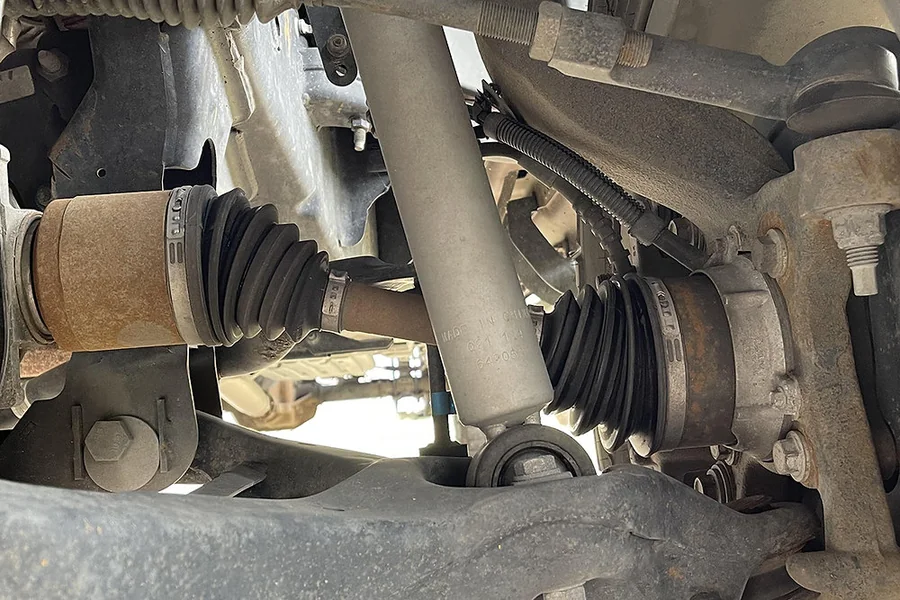
Most people don’t think twice about CV joints—until something goes wrong. Maybe it starts with a strange clicking sound when you turn, or some shaking when you drive. Even a bit of grease on the driveway might be a clue. CV joints aren’t big or flashy, but they play a key part in making sure your car drives properly. If they wear out or break, you’re looking at a serious repair—or worse, losing control of the car.
Here’s what CV joints do, how they work, and what signs to watch out for.
What Is a CV Joint?
CV stands for constant velocity. A CV joint is a piece of the drive shaft, which is the part that moves power from your engine to your wheels. Without it, your car wouldn’t be able to move or steer like it should.
Most front-wheel drive cars have CV joints, and many rear- or four-wheel drive cars use them as well. They’re not very big, but they do a lot. They let the wheels move up and down with the road, and also turn left and right, while still sending power through the axle at the same speed. That’s where the “constant velocity” part comes from—it helps keep the drive smooth.
Without working CV joints, the wheels can’t turn properly, and the whole car starts feeling rough or unstable.
The Two Types of CV Joints
There are two CV joints on each axle—one on the outside and one on the inside.
- Outer CV Joint: This one connects the drive shaft to the wheel. It moves more because it turns with the wheel when you steer.
- Inner CV Joint: This connects the drive shaft to the gearbox. It stays a bit more still but is just as important.
Both are covered by rubber boots, which are packed with grease. These boots keep dirt and water out, and keep the joint moving freely. If the boot tears, grease leaks out, and grit can get in—this is usually the start of CV joint problems.
How Do CV Joints Work?
When you press the accelerator, your engine sends power through the gearbox to the drive shaft. The CV joints let the shaft spin and bend at the same time. So whether you’re going over a bump or turning a sharp corner, the wheels stay powered and the drive feels smooth.
If your car didn’t have CV joints, every small turn or dip in the road would jolt the car. You’d feel it through the steering wheel and pedals. It wouldn’t be safe or comfortable to drive. So even though you don’t see them, CV joints are working every time the car moves.
Why CV Joints Matter
When a CV joint starts to wear out, the first signs are usually noise, shaking, or leaking grease. But if the problem gets worse and the joint breaks, you could lose control of the car, especially while turning or braking. In some cases, the car might not move at all.
That’s why catching problems early can save you money—and keep you safe.
Signs Your CV Joint Might Be Failing
Watch out for the following:
- Clicking or popping when turning: This often means the outer CV joint is worn. It’s usually louder when turning at low speeds.
- Vibration when accelerating: If the car shakes when you speed up, the inner CV joint might be the problem.
- Grease around the wheel or on the driveway: A torn rubber boot lets grease leak out and dirt get in. This makes the joint wear out quicker.
- Strange handling or pulling to one side: If the car feels odd while steering or going round corners, the CV joint could be worn or damaged.
How to Look After CV Joints
You don’t need to be a mechanic to keep your CV joints in good shape. Here are a few things that help:
- Check the boots now and then: When your car’s in for a service or tyre change, ask the mechanic to check the rubber boots. If they’re split or cracked, get them changed. Replacing a boot is cheap. Replacing a full joint isn’t.
- Avoid sharp turns and rough roads: Driving fast over potholes or turning sharply puts more pressure on the joints. Taking it easy helps them last longer.
- Listen for changes: Clicking, knocking, or shaking might not seem urgent at first, but they usually get worse. It’s better to sort it early than wait until the joint fails completely.
What to Do if You Think There’s a Problem
If you notice any of the signs above, it’s best to have the car looked at right away. A mechanic will check the CV joints and boots, and let you know if anything needs replacing.
If the rubber boot is torn but the joint still works, they can often just replace the boot and add fresh grease. If the joint’s already worn down, it might need to be replaced. Sometimes garages replace the whole drive shaft, especially if both joints are getting old.
This isn’t a job most people can do themselves. It needs the right tools and some know-how, especially to get the wheel off and the joint back in place without damaging anything.
CV joints aren’t the sort of part most drivers think about—but they’re always working to keep your car moving properly. The first sign of a clicking noise or bit of grease on the tyre might not seem like much, but it’s often the start of a bigger problem.
Checking the rubber boots now and again, driving carefully, and paying attention to changes in how your car feels can go a long way in keeping those joints working as they should. And if something feels off, don’t leave it—sorting it early can save you a lot of hassle later on.
